Model Your World: Introduction to Modeling and Simulation
2025-11-17
Chapter 1 Welcome
1.1 Teaching Team Introductions Gaj Sivandran
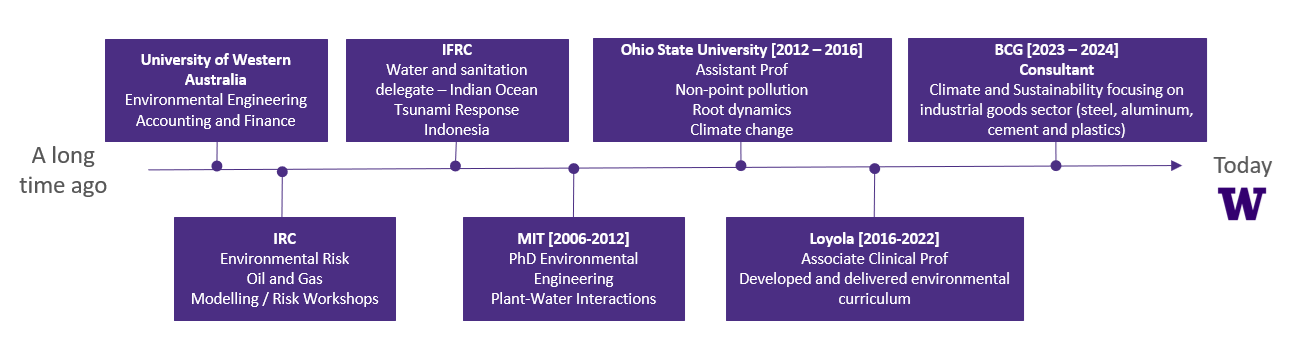
Teaching Interests
- Design (freshman and senior)
- Fundamental engineering (statics, fluids)
- Environmental labs
- Water resources
Research Interests
- Climate change
- Active learning pedagogy
- Simulation modeling
- Decision support (socio-economic modelling)
Random Facts
- I have an 11yr old daughter that helps me write exam questions
- Dogs >Cats, Cricket > Baseball, AFL > NFL, Vegemite > Peanut butter
- I like to run very very long distances, stilling working on why
1.2 Course Highlights
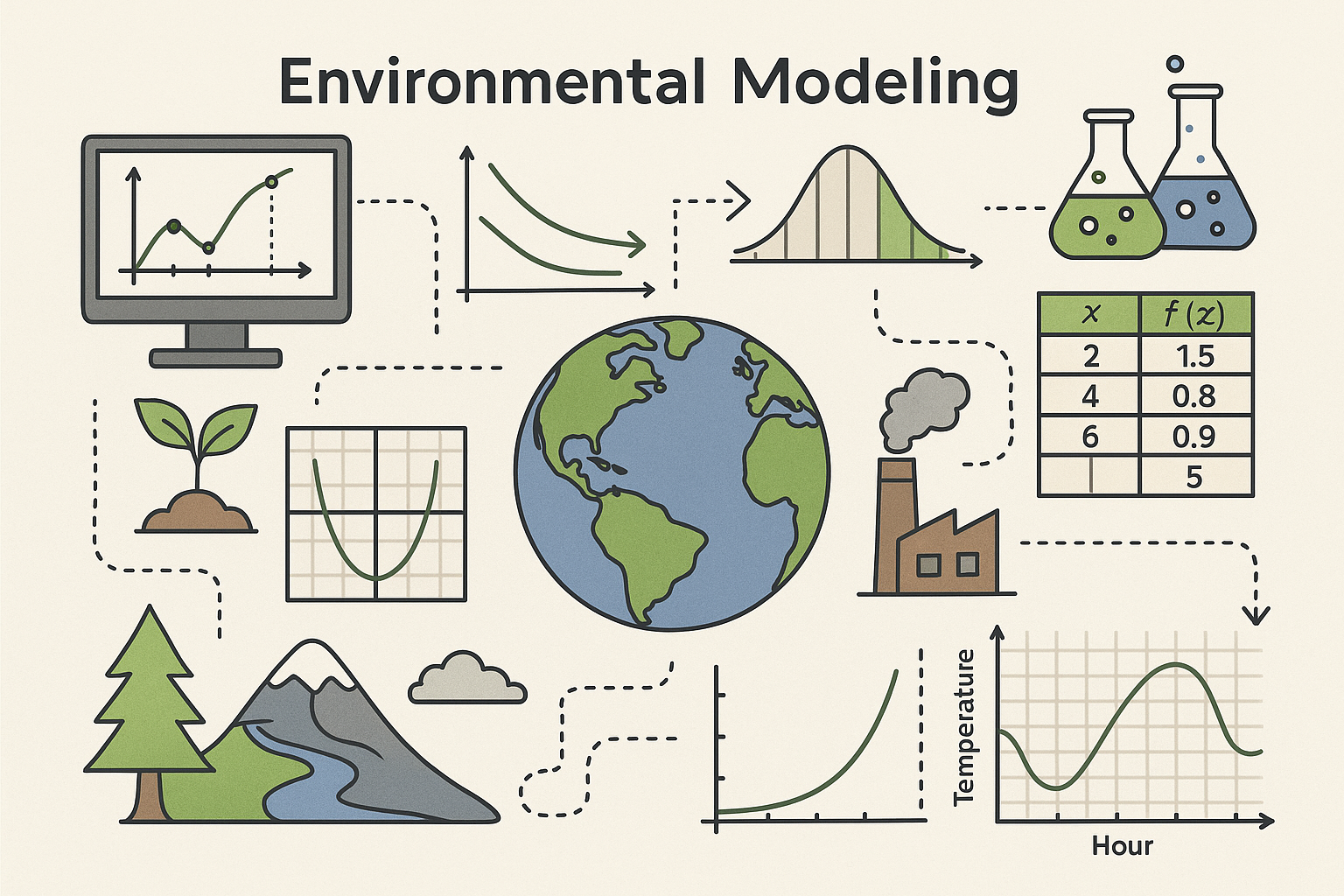 This is the first offering of this course - what does that mean?
- I’m looking for your continuous feedback on what is working and what is not
- I’m going apply “Just-In-Time” teaching philosophy. What this essentially means is the course material is dynamic, if there is a need from the class to cover a topic - we can add it in
- Accessibility requirements for the Spring.
1.3 What are the learning outcomes
By the end of the course, students will be able to:
- Explain the philosophy of modeling: abstraction, assumptions, and trade-offs.
- Use AI tools responsibly to support model design, coding, and analysis.
- Build and analyze basic mathematical and computational models (e.g., growth, predator–prey, carbon cycles).
- Implement simulation techniques in R, including discrete-event, continuous-time, and agent-based models.
- Explore the roles of uncertainty, sensitivity, and validation in modeling.
- Communicate modeling results clearly through visualizations, reports, and presentations.
Class Discussion
Anything you want to add/remove/emphasize/de-emphasize?
Class Discussion
Lets find out why you all have decided to be here. With the people around you, discuss why you are taking this class. We’ll share back in 5mins.
Class Discussion
The way we code is changing rapidly right now with the development of LLMs. You might rightly ask “why do we need to know how to code?”
- Discuss it with the people at your table
We are scientists! So it would be great to see arguments from all perspectives - play ‘devil’s advocate’ its more fun if we don’t all agree
- What should our goal be in light of your discussion?
One of my favorite education quotes:
“We are currently preparing students for jobs that don’t yet exist… using technologies that haven’t been invented… in order to solve problems we don’t even know are problems yet” - Richard Riley U.S. Secretary of Education (1993-2001)
1.4 Notes and Textbooks
Quick Canvas tour
I am writing and publishing the textbook on the fly. To make sure you are working with the most up-to-date version hit refresh or close the tab from time to time.
1.5 Course Topics
This being the first year – this is my ambitious list of topics – we’ll see how far we get (maybe further)
- Introduction to Modeling – abstraction, assumptions, model types.
- AI & Modeling Tools – using LLMs to support coding and model design.
- Mathematical Models – parameters, functions, growth models.
- Difference Equations – discrete-time dynamics, feedback, stability.
- Differential Equations – continuous-time systems in ecology/environment.
- Simulation as a Tool – discrete-event and continuous-time simulation.
- Uncertainty & Sensitivity – calibration, robustness, validation.
- Spatial & Agent-Based Models – individuals and space in systems.
- Communicating Models – visualization, ethics, limits.
- Capstone Showcase – final project presentations.
Class Discussion
Anything you want to add/remove/emphasize/de-emphasize?
1.6 Classroom Etiquette

- Please feel free to bring your breakfast/lunch to class – just be sure to clean up before you leave
- Bring whatever tech you need to take notes and engage.
- We will code in class so setting up R Studio is a good idea
- Ask questions – but please be respectful of all voices and views - wrong answers have more value than right ones!
Norms - Class Discussion
Lets come up with a set of rules and expectations for this class and then lets agree to follow them.
1.7 Assessment
My goal with the assessments is to encourage you to put energy in the right places. I do not want to create busy work in this class. But - At the same time - sometimes having a due date forces us to do the things that are good for us, but not as much fun.
Class Discussion
Right now the assessment breakdown is:
- Homework & Labs (40%) – Weekly assignments and lab reports where students build, test, and reflect on models.
- Final Project (40%) – Develop and present a model of a real-world environmental system (individual or group). Includes a written report and in-class presentation.
- Participation & Preparation (20%) – In-class activities, peer feedback, and engagement in discussions.
What should the project be worth?
Here are the basics
Milestone 1: Proposal & Scoping (Week 3)
- Topic idea (1–2 paragraphs)
- Research question(s)
- Initial model concept (sketch or description)
- Deliverable: 1–2 page written proposal + brief in-class discussion
Milestone 2: Background & Model Design (Week 5)
- Short background review (1–2 pages, with at least 3–5 references)
- Model framework (diagram of variables, flows, assumptions)
- Plan for methods (what kind of model and why)
- Deliverable: Background report + 3–5 minute pitch with peer Q&A
Milestone 3: Prototype Model (Week 7)
- First working version of your model in R
- At least one test run with outputs
- 1-page reflection on challenges and next steps
- Deliverable: Code + reflection memo
Milestone 4: Model Refinement & Analysis (Week 9)
- Improved and more complete model
- Sensitivity tests, scenario comparisons, or uncertainty analysis
- At least 2–3 polished visualizations
- Deliverable: Draft results section (1–2 pages) with figures
Milestone 5: Final Report & Showcase (Week 10)
- Final written report (6–8 pages, including intro, methods, results, discussion, references, and code appendix)
- A poster of your work – we’ll have our own digital poster session at the end of this course.
- Deliverable: Report + poster presentation
Grading
- Detailed rubrics will be provided for each milestone.
- For Milestones 1 through 4, you will be given the opportunity to address feedback to earn back any points lost during the first submission.
The project grade will be broken down as follows:
- Proposal & Scoping: 10%
- Background & Model Design: 15%
- Prototype Model: 15%
- Refinement & Analysis: 20%
- Final Report & Presentation: 40%
Being an elective, it means you all have different levels of preparation for this course. Grades will focus on your growth rather than comparisons to other students.
Admin
Every Friday will be project work. Either setting the groundwork for your project or delivering a milestone. This Friday - come with a rough idea of what system you’d like to model/simulate. We’ll use the class time to workshop the idea. There will be a graded Canvas discussion board where you will need to drop your idea into.